

Introduction:
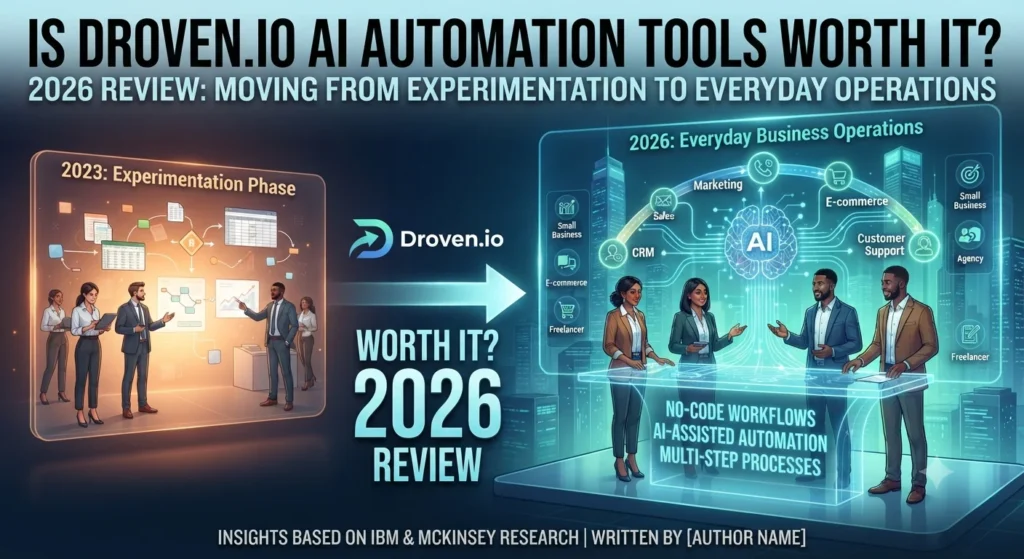
Artificial intelligence has moved beyond being a simple technology trend. Businesses are increasingly using AI to automate repetitive processes, improve decision-making, and create more efficient workflows.
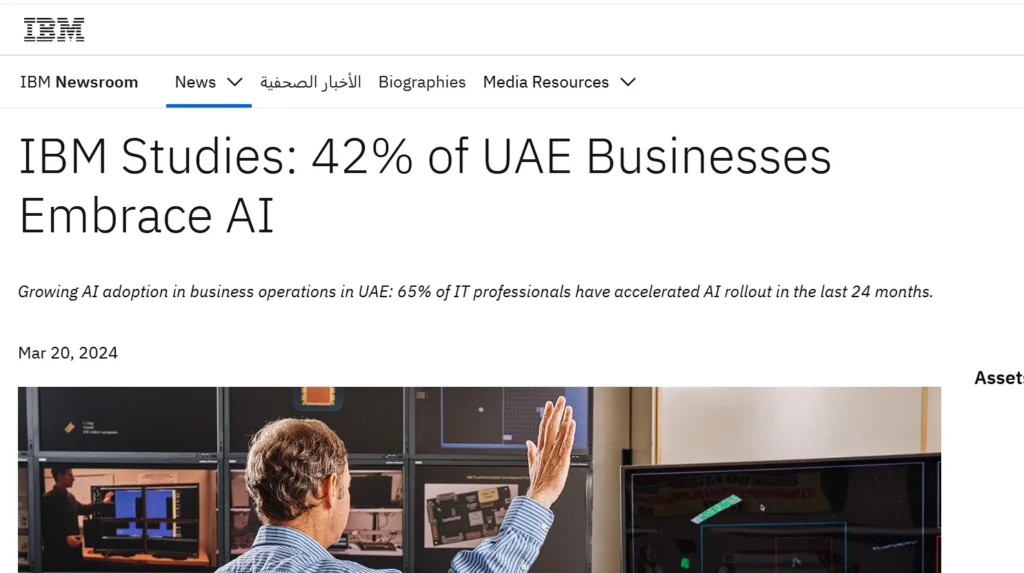
According to IBM’s 2023 Global AI Adoption Index regional findings, AI adoption is accelerating among businesses. The study found that 42% of surveyed UAE companies had already deployed AI in their business operations. In comparison, 65% of UAE IT professionals reported that AI rollout had accelerated during the previous 24 months. The research also highlighted that reducing costs and automating key processes are among the major drivers behind business AI adoption.
This shift explains why AI-powered workflow automation platforms are becoming more important for startups, agencies, freelancers, and growing companies. Instead of manually managing repetitive tasks across different applications, businesses are looking for tools that can connect systems, analyze information, and automate routine operations.
Among the growing category of AI automation platforms, Droven.io AI Automation Tools positions itself as a no-code workflow automation solution designed to help businesses build smarter processes without requiring advanced programming knowledge.
But is Droven.io actually worth considering in 2026?
In this review, we examine Droven.io’s workflow capabilities, automation features, possible use cases, integrations, limitations, and overall value to help businesses understand where the platform fits compared with other automation solutions.
AI automation tools for businesses
Quick Verdict: Is Droven.io Worth It?
Droven.io can be a useful option for small and medium-sized businesses that want to automate repetitive digital tasks without building complex custom systems.
Its biggest advantage is the combination of:
- No-code workflow creation
- AI-assisted automation
- Multi-step business processes
- Beginner-friendly design
- Integration-focused workflows
However, businesses with highly specialized enterprise requirements, advanced infrastructure needs, or strict compliance environments should carefully evaluate whether the platform meets their technical requirements before adoption.
Best For
✅ Small businesses
✅ Startups
✅ Marketing agencies
✅ Freelancers and consultants
✅ E-commerce businesses
✅ Sales teams
✅ Customer support teams
✅ Operations managers
May Not Be Ideal For
❌ Large enterprises requiring highly customized infrastructure
❌ Organizations needing complex on-premise deployments
❌ Businesses without repetitive digital workflows
What Are Droven.io AI Automation Tools?
Short Answer
Droven.io is an AI-powered workflow automation platform designed to help businesses connect applications, automate repetitive processes, and create intelligent workflows through a visual, no-code interface.
Traditional automation tools usually focus on moving information between applications. For example, transferring customer details from a form into a spreadsheet or CRM system.
AI-powered automation goes further by allowing workflows to analyze information, generate responses, classify data, and assist with operational decisions.
This change is becoming increasingly important as organizations move from simple automation toward more intelligent AI-supported processes.
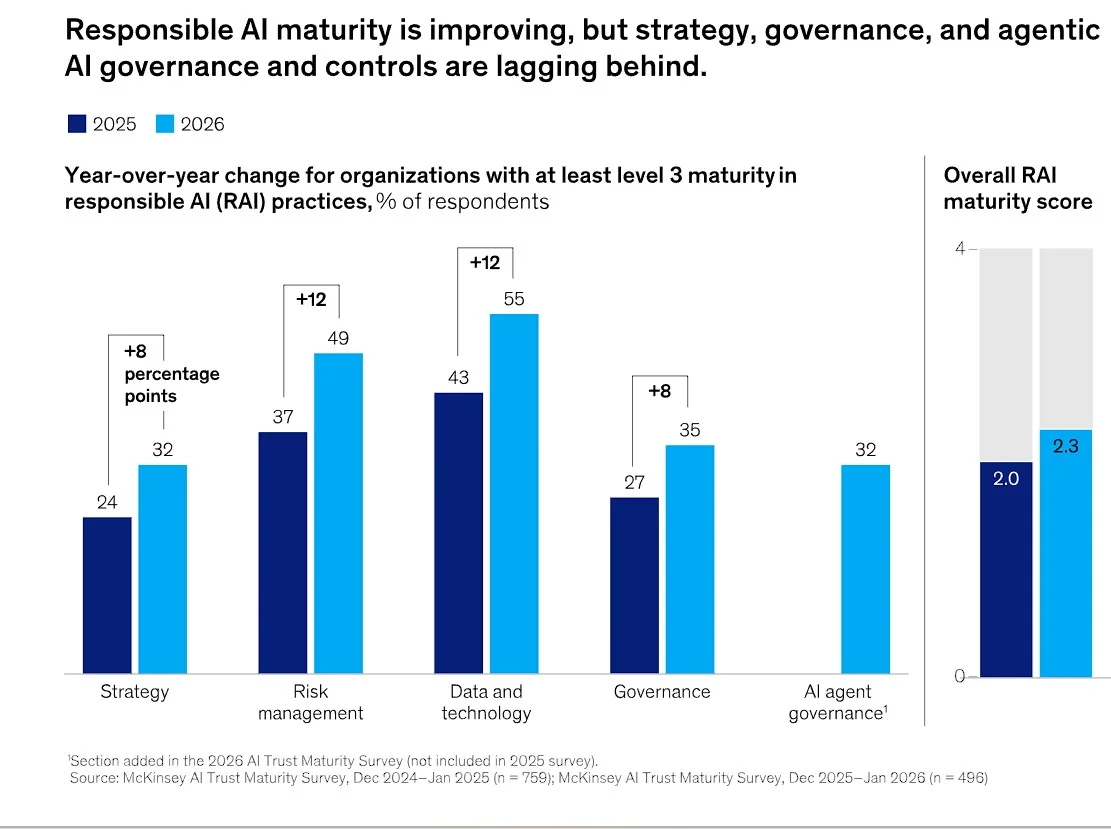
McKinsey’s 2026 AI Trust Maturity Survey highlights that organizations are increasingly moving beyond AI experimentation toward scaled deployment of generative AI and agentic AI across business functions. However, the research also shows that companies must address governance, security, and risk management challenges as AI systems become more autonomous.
For businesses, this means automation is no longer only about saving clicks—it is also about creating reliable systems that can support daily operations.
How Does Droven.io AI Automation Work?
Droven.io follows a visual workflow approach where users can create automated processes by connecting different steps.
Instead of manually performing repetitive actions, businesses can design workflows that automatically trigger specific tasks.
For example:
| Step | Process | What Happens |
|---|---|---|
| 1 | Contact Form Submission | Customer shares their information through the website |
| 2 | CRM Update | Customer details are automatically saved |
| 3 | Email Generation | A personalized email response is created |
| 4 | Team Notification | Sales representatives receive an alert |
| 5 | Follow-Up Creation | Tasks and reminders are automatically scheduled |
| 6 | Reporting Update | Workflow activity is stored for analysis |
This type of workflow can reduce repetitive administrative work and help teams maintain consistency.
For non-technical users, the main advantage is that workflows can be created visually instead of requiring custom code.
Why Are Businesses Turning Toward AI Automation?
Several business needs drive the increasing interest in AI automation:
Reducing Manual Work
Many organizations spend significant time on repetitive tasks such as:
- Data entry
- Customer follow-ups
- Reporting
- Scheduling
- Internal communication
Automation helps teams spend more time on higher-value activities.
Improving Workflow Consistency
Manual processes often create problems because different employees may complete tasks differently.
Automated workflows can help standardize processes by following predefined steps.
Supporting Faster Decision-Making
AI-powered systems can analyze information faster and help teams process large amounts of data.
For example:
- Summarizing customer messages
- Categorizing requests
- Creating reports
- Identifying patterns
Key Factors Businesses Should Consider Before Choosing an AI Automation Tool
Choosing an automation platform is not only about the number of features available.
Businesses should evaluate:
Ease of Use
Can employees create workflows without technical assistance?
Integration Availability
Does the platform connect with the applications the business already uses?
Security and Data Handling
How does the platform manage sensitive business information?
Scalability
Can the system support increasing workflow complexity as the business grows?
These factors are becoming more important as AI systems become more connected with business operations.
McKinsey’s 2026 AI Trust Maturity Survey found that security and risk concerns were the leading barrier to scaling agentic AI, with nearly two-thirds of respondents identifying these issues as major obstacles. This highlights why businesses should evaluate not only automation capabilities but also trust, governance, and security practices.
Key Features of Droven.io AI Automation Tools
Droven.io’s main purpose is to simplify business automation by combining workflow management with AI capabilities. Instead of requiring businesses to build custom software or depend entirely on developers, the platform makes automation accessible through visual workflows.
However, the real value of any automation platform depends on how effectively it solves practical business problems. Below are the major areas where Droven.io can provide value.

1. No-Code Workflow Builder
One of the most important features of modern automation platforms is the ability to create workflows without writing programming code.
Droven.io uses a visual workflow approach that allows users to connect different actions and define how information moves between systems.
For example, a marketing team could create a workflow where:
| Step | Process | Description |
|---|---|---|
| 1 | Customer Inquiry Received | A customer submits a question, request, or contact form through the website. |
| 2 | Lead Information Saved | Customer details are automatically stored in the CRM system. |
| 3 | Sales Notification Sent | The sales team receives an instant alert about the new lead. |
| 4 | Follow-Up Reminder Created | A reminder or task is generated to ensure timely communication. |
| 5 | Customer Response Tracked | All interactions are recorded to monitor progress and improve customer management. |
Instead of manually completing each step, the workflow handles repetitive actions automatically.
Benefits of a No-Code Workflow System
A visual workflow builder can help businesses:
- Reduce dependency on technical teams.
- Create processes faster
- Modify workflows easily
- Standardize repetitive tasks
- Allow non-developers to participate in automation projects.
This approach is especially useful for small businesses and agencies that may not have dedicated automation developers.
2. AI-Powered Workflow Automation
Traditional automation usually follows fixed rules:
If this happens → perform that action.
AI-powered automation adds another layer by allowing systems to process information before taking action.
Examples of AI-assisted workflow tasks include:
- Summarizing customer conversations
- Categorizing support requests
- Creating email drafts
- Analyzing documents
- Extracting important information
- Helping prioritize leads
For example, instead of sending every customer message to the same department, an AI-powered workflow could analyze the message and identify whether it relates to sales, technical support, billing, or another category.
This type of automation is becoming more relevant as businesses move from simple task automation toward more intelligent AI-supported operations.
3. Multi-Step Business Process Automation
Most business activities are not single tasks. They involve multiple steps across different departments and applications.
A customer order, for example, may involve:
| Step | Process | Description |
|---|---|---|
| 1 | Customer Purchase | The customer completes an order through the website or sales platform. |
| 2 | Payment Confirmation | The payment system verifies and confirms the transaction. |
| 3 | Inventory Update | Stock levels are automatically updated to reflect the purchase. |
| 4 | Invoice Generation | A digital invoice is created and prepared for the customer. |
| 5 | Customer Notification | The customer receives order confirmation and relevant updates. |
| 6 | Internal Reporting | Sales and transaction data are recorded for business analysis and reporting. |
Managing every step manually increases the possibility of delays and mistakes.
A workflow automation platform allows businesses to connect these processes into one system.
Examples of Multi-Step Workflows
Sales Workflow
| Step | Process | Description |
|---|---|---|
| 1 | Lead Submission | A potential customer submits their information through a website form, landing page, or sales channel. |
| 2 | CRM Entry | Lead details are automatically added to the CRM system for tracking and management. |
| 3 | Sales Notification | The sales team receives an alert about the new lead. |
| 4 | Follow-Up Scheduling | Automated reminders and follow-up tasks are created to maintain communication. |
Customer Support Workflow
| Step | Process | Description |
|---|---|---|
| 1 | Customer Complaint Received | A customer submits a question, issue, or support request. |
| 2 | AI Categorizes Issue | AI analyzes the request and assigns it to the correct category. |
| 3 | Support Ticket Created | A support ticket is automatically generated for tracking. |
| 4 | Team Member Assigned | The issue is assigned to the appropriate support representative. |
Marketing Workflow
| Step | Process | Description |
|---|---|---|
| 1 | Campaign Launched | A marketing campaign is started across selected channels. |
| 2 | Customer Responses Collected | Customer interactions, clicks, and responses are gathered automatically. |
| 3 | Reports Generated | Performance data is organized into marketing reports. |
| 4 | Performance Insights Created | Businesses receive insights to improve future campaigns. |
4. AI Content Assistance
Many businesses create large amounts of written content every day.
AI-powered assistance can help teams speed up tasks such as:
- Marketing email drafts
- Product descriptions
- Customer replies
- Internal summaries
- Meeting notes
- Documentation
The important point is that AI should support human decision-making rather than completely replace human review.
Businesses should always review AI-generated content for:
- Accuracy
- Brand consistency
- Customer sensitivity
- Data privacy concerns
McKinsey’s 2026 AI Trust Maturity Survey highlights that AI risks remain a major concern for organizations. The study found that 74% of respondents identified AI inaccuracy as a highly relevant risk, while 72% highlighted cybersecurity concerns. This shows why businesses need proper review processes when implementing AI-powered workflows.
5. Productivity and Workflow Monitoring
Automation is only useful when businesses understand whether workflows are actually improving operations.
A good automation platform should provide visibility into areas such as:
- Workflow activity
- Successful executions
- Failed processes
- Processing times
- Automation performance
Monitoring helps businesses identify problems and improve workflows over time.
For example:
A company may discover that an automated customer response workflow works most of the time but fails when certain data fields are missing.
Without monitoring, these problems can remain unnoticed.
6. Team Collaboration Features
One person rarely manages business automation.
Marketing teams, sales departments, customer support representatives, and operations managers often work together on automated processes.
Collaboration features can help teams manage:
- Shared workflows
- User access
- Workflow ownership
- Activity history
- Process updates
For growing organizations, clear ownership becomes increasingly important.
McKinsey’s 2026 AI Trust Maturity Survey found that organizations with clear Responsible AI ownership achieved higher maturity scores than organizations without defined accountability structures.
This highlights an important lesson:
Automation success is not only about technology—it also depends on people, processes, and governance.
Who Should Use Droven.io?
Droven.io is most useful for businesses that perform repetitive digital tasks and want to improve operational efficiency.
Small Businesses
Small companies often operate with limited staff, meaning owners and employees handle multiple responsibilities.
Automation can help with:
- Customer communication
- Appointment reminders
- Basic reporting
- Lead management
- Administrative tasks
By reducing repetitive work, teams can focus more time on growth activities.
Marketing Agencies
Marketing agencies manage multiple clients, campaigns, and reporting requirements.
Automation can support tasks such as:
- Lead collection
- Client onboarding
- Campaign notifications
- Reporting workflows
- Content approval processes
For agencies, automation can improve consistency when handling multiple projects simultaneously.
E-commerce Businesses
Online stores deal with repetitive customer interactions every day.
Potential automation areas include:
- Order confirmations
- Customer notifications
- Inventory updates
- Support requests
- Review collection
Automation can help improve response speed and reduce manual workload.
Sales Teams
Sales professionals often spend significant time on administrative activities.
Automation can assist with:
- Lead organization
- CRM updates
- Follow-up reminders
- Customer communication tracking
This allows sales teams to spend more time building relationships with potential customers.
Freelancers and Consultants
Independent professionals often manage their own operations.
Automation can help handle:
- Client onboarding
- Proposal follow-ups
- Appointment reminders
- Invoice processes
- Document organization
This can allow freelancers to spend more time delivering client work.
Droven.io Integrations
A workflow automation platform is only useful when it connects with the tools businesses already use.
Droven.io’s value depends heavily on its available integrations and how smoothly those connections work.
Common categories businesses usually require include:
CRM Platforms
Examples:
- Salesforce
- HubSpot
- Zoho CRM
- Pipedrive
Used for:
- Lead management
- Customer tracking
- Sales automation
Communication Tools
Examples:
- Gmail
- Outlook
- Slack
- Microsoft Teams
Used for:
- Notifications
- Team communication
- Automated responses
Cloud Storage Platforms
Examples:
- Google Drive
- Dropbox
- OneDrive
Used for:
- Document workflows
- File organization
- Data sharing
Project Management Tools
Examples:
- Trello
- Asana
- Monday.com
Used for:
- Task automation
- Team coordination
- Project updates
E-commerce Platforms
Examples:
- Shopify
- WooCommerce
Used for:
- Order workflows
- Customer updates
- Inventory processes
Important Note About Integrations
Before choosing Droven.io, businesses should verify the latest integration list through official documentation.
A platform may advertise automation capabilities, but the practical value depends on whether it supports the exact applications a business already uses.
For example:
A marketing agency using HubSpot and Slack should confirm:
- Is the integration officially supported?
- Are all required actions available?
- Are there limitations?
- Does it require third-party connectors?
Droven.io vs Other AI Automation Platforms (2026 Comparison)
Choosing an automation platform depends on several factors, including technical requirements, workflow complexity, available integrations, budget, and the level of AI assistance required.
No single automation platform is perfect for every business. A freelancer may need simplicity, while an enterprise may require advanced customization, security controls, and developer flexibility.
Below is a practical comparison of Droven.io with other popular automation categories.
| Main Focus | AI-powered workflow automation | App-to-app automation | Advanced visual workflows | Developer-focused automation |
| Ease of Use | Beginner-friendly | Beginner-friendly | Moderate learning curve | Requires more technical knowledge |
| Workflow Builder | Visual no-code approach | Visual automation builder | Advanced visual editor | Flexible workflow editor |
| AI Capabilities | AI-assisted workflows | AI features available | AI integrations available | Custom AI workflows |
| Best For | Small businesses, agencies, growing teams | Simple business automation | Complex visual workflows | Developers and technical teams |
| Customization | Suitable for standard business workflows | Good for common automation | High flexibility | Very high flexibility |
Comparison Summary
Droven.io’s potential advantage is its focus on combining AI capabilities with a simpler workflow-building experience.
Platforms such as Zapier are widely recognized for connecting thousands of applications and making basic automation accessible. Make is often preferred by users who need more complex visual workflow logic, while n8n is popular among technical users who want deeper customization.
The right choice depends on the business requirement:
- Businesses wanting simple automation should prioritize ease of use.
- Teams managing complex processes should evaluate workflow flexibility.
- Organizations handling sensitive information should carefully review security and governance features.
As AI systems become more integrated into business operations, responsible deployment is becoming increasingly important. McKinsey’s 2026 AI Trust Maturity Survey found that organizations are moving toward scaled AI adoption, but security, governance, and risk management remain major challenges.
Pros and Cons of Droven.io AI Automation Tools
Every automation platform has strengths and limitations. Understanding both sides helps businesses decide whether a tool matches their actual needs.
Pros
Beginner-Friendly Workflow Creation
A no-code approach can help non-technical users create and manage workflows without depending entirely on developers.
AI-Assisted Automation
AI capabilities can help businesses process information, summarize content, and support workflow decisions.
Reduces Repetitive Tasks
Automation can help reduce manual administrative work such as:
- Data entry
- Notifications
- Follow-ups
- Reporting tasks
Supports Business Growth
Growing businesses can use automation to create repeatable processes instead of managing every task manually.
Improves Workflow Consistency
Automated processes can reduce variation by following predefined steps.
Cons
Advanced Workflows May Require Planning
Although no-code tools are easier to start with, complex automation still requires understanding business processes.
Integration Availability Should Be Verified
Businesses should confirm whether their required applications are officially supported.
AI Outputs Need Human Review
AI-generated responses and decisions should be checked for accuracy, especially when customer data or business decisions are involved.
Enterprise Requirements May Need Additional Evaluation
Large organizations may require:
- Advanced compliance controls
- Dedicated infrastructure
- Custom development options
Is Droven.io Worth the Price?
The value of an automation platform should not only be measured by its subscription cost.
The bigger question is:
How much time and operational effort can the automation save?
For example, a business spending several hours every week on:
- Updating customer records
- Sending follow-up emails
- Creating reports
- Organizing requests
- Assigning internal tasks
may recover significant time by automating repetitive workflows.
However, the actual return depends on:
- Number of automated processes
- Employee time saved
- Workflow complexity
- Business size
- Automation accuracy
AI Investment and Business Value
McKinsey’s 2026 AI Trust Maturity Survey highlights that organizations investing heavily in Responsible AI programs are more likely to achieve higher AI maturity and measurable business value.
The research found that organizations investing $25 million or more into Responsible AI initiatives reported stronger AI maturity and were more likely to achieve significant AI-related business impact.
For small and medium businesses, this does not mean they need enterprise-level investment. Instead, it shows an important principle:
Successful AI adoption requires not only buying software but also building proper processes, training, oversight, and responsible usage practices.
Is Droven.io Secure for Business Use?
Security is one of the most important factors when adopting AI automation software.
Automation platforms may handle:
- Customer information
- Business documents
- Internal communication
- Sales data
- Operational records
Before deployment, businesses should evaluate:
- Data encryption practices
- User permission controls
- Authentication options
- Data storage policies
- Compliance requirements
- Workflow monitoring capabilities
Why AI Security Matters in 2026
According to McKinsey’s 2026 AI Trust Maturity Survey, organizations are increasingly concerned about AI-related risks.
The research found:
- 74% of respondents identified AI inaccuracy as a major risk
- 72% identified cybersecurity as a major AI risk
- Nearly two-thirds reported security and risk concerns as a major barrier to scaling agentic AI.
These findings show that businesses should evaluate automation platforms based on both productivity and trust.
A powerful AI tool is only valuable when businesses can use it safely and responsibly.
McKinsey & Company, State of AI Trust in 2026: Shifting to the Agentic Era, March 25, 2026.
Who Should Choose Droven.io?
Droven.io may be a suitable choice for organizations that want to automate repetitive digital workflows without building custom software.
It is particularly relevant for:
Small and Medium Businesses
Businesses looking to improve efficiency with limited technical resources.
Startups
Teams that need scalable processes while keeping operational costs controlled.
Marketing Agencies
Companies managing multiple clients, campaigns, and reporting tasks.
E-commerce Businesses
Online retailers handling customer communication and order processes.
Freelancers and Consultants
Independent professionals who want to automate administrative work.
Final Verdict: Is Droven.io AI Automation Tools Worth It in 2026?
AI automation is becoming a practical business requirement rather than just an emerging trend.
IBM research shows that businesses are increasingly adopting AI to improve operations, with 42% of surveyed UAE companies already deploying AI in business operations and many organizations accelerating AI implementation.
At the same time, McKinsey research highlights that successful AI adoption requires more than technology alone. Organizations must also focus on security, governance, responsible usage, and proper implementation.
Droven.io fits into this changing environment by focusing on AI-powered workflows and no-code automation.
Its strongest advantages are:
- Accessible workflow creation
- AI-supported processes
- Reduced repetitive work
- Business-focused automation
However, businesses should evaluate their specific requirements before choosing any automation platform, especially regarding integrations, security, pricing, and scalability.
For startups, freelancers, agencies, and growing businesses looking to automate everyday processes, Droven.io can be a valuable option to explore in 2026.
Frequently Asked Questions (FAQs)
Droven.io is an AI-powered workflow automation platform designed to help businesses automate repetitive tasks, connect applications, and create workflows without requiring advanced programming skills.
Yes, businesses without technical teams may find no-code workflow tools easier to adopt because they allow users to create automation visually instead of writing code.
However, complex workflows may still require planning and process knowledge.
Businesses that regularly perform repetitive digital tasks may benefit most, including:
Small businesses
Startups
Agencies
E-commerce companies
Consultants
Sales teams
Before implementation, businesses should evaluate:
Available integrations
Security practices
Workflow limitations
Pricing structure
Data handling policies
For businesses looking to automate repetitive workflows and improve operational efficiency, Droven.io may provide value depending on their workflow requirements and technical needs.
The best choice depends on the business goals, existing software environment, and automation complexity.
Conclusion
Businesses are under increasing pressure to improve efficiency while managing limited resources. AI-powered automation provides a practical way to reduce repetitive work, improve consistency, and create more scalable operations.
IBM research demonstrates that AI adoption is accelerating across businesses, while McKinsey’s research shows that organizations must balance AI innovation with trust, security, and responsible implementation.
Droven.io combines workflow automation with AI capabilities, making it a potentially useful solution for businesses that want a simpler way to automate daily processes.
Although no automation platform is suitable for every organization, companies that carefully evaluate their workflows, security requirements, and automation goals can determine whether Droven.io is the right fit for their needs in 2026.
Droven.io Cloud Computing Guide: A Practical Decision Framework for 2026
What Are the Best AI Tools for Business Workflow Analysis and Process Mapping in 2026?
OUR TOOLS
Turn images into one PDF
PDF to JPG
