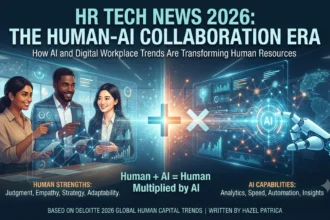

I’ve been following technology trends for more than a decade, especially how artificial intelligence is reshaping industries. Over the past few years, I’ve closely tracked HR technology, tested dozens of HR platforms, and analyzed the innovations changing how companies hire, manage, and retain talent. This guide brings together the biggest HR tech developments from October 2025 while explaining why they still matter in 2026.
HR Tech News Today, October 2025: Top Trends & AI Updates
The HR tech news cycle for October 2025 marked one of the biggest turning points for human resources technology in recent years. Artificial intelligence moved from being an experimental feature to becoming a core component of hiring, employee engagement, workforce planning, payroll automation, and talent management.
Organizations of every size—from startups to Fortune 500 companies—accelerated investments in AI-powered HR software to improve efficiency while creating better employee experiences. At the same time, governments and industry leaders introduced more robust conversations about responsible AI, privacy, transparency, and compliance.
Whether you’re an HR professional, recruiter, business owner, or simply interested in workplace innovation, understanding the biggest HR technology news from October 2025 provides valuable insight into where the industry is heading in 2026 and beyond.
Why Was October 2025 Such an Important Month for HR Technology?
In short, October 2025 became a milestone because AI adoption reached mainstream HR departments. Instead of asking whether AI should be used, organizations began asking how to use it responsibly and effectively.
Throughout the month, major software providers launched intelligent features to automate repetitive HR tasks and help HR professionals focus on strategic decision-making.
Some of the biggest themes included:
- AI recruiting assistants
- Automated candidate screening
- HR analytics powered by machine learning
- Employee experience platforms
- Payroll automation
- Skills-based hiring
- Workforce planning tools
- HR compliance automation
- Enterprise HR software upgrades
- Human capital management innovation
These developments didn’t just improve productivity—they fundamentally changed how organizations think about talent acquisition and workforce management.
What Were the Biggest HR Tech News Headlines in October 2025?
The biggest stories focused on AI becoming an everyday HR tool rather than a future technology. Companies also invested heavily in employee experience, automation, and data-driven decision-making.
Here are the major highlights from the latest HR tech news during October 2025.
AI Recruiting Became the New Standard
Recruiters increasingly rely on AI-powered recruiting platforms to reduce hiring time.
Instead of manually reviewing hundreds of resumes, AI systems could:
- Match applicants with job descriptions
- Rank candidates
- Identify relevant skills
- Predict hiring success
- Reduce administrative workload
Many AI recruiting tools also introduced conversational chatbots capable of answering candidate questions 24/7, scheduling interviews, and guiding applicants through hiring workflows.
This shift helped organizations improve candidate experiences while allowing recruiters to focus on relationship-building rather than paperwork.
HR Automation Expanded Beyond Recruitment
Recruitment wasn’t the only department benefiting from automation.
The latest HR automation news showed companies expanding automation into:
- Employee onboarding
- Benefits administration
- Leave management
- Performance reviews
- Payroll processing
- Compliance reporting
- Learning management
- Employee feedback collection
Modern HR management software increasingly serves as an intelligent digital assistant, handling repetitive tasks with minimal human intervention.
Employee Experience Became a Business Priority
Another major trend from the October 2025 HR news cycle was the growing emphasis on employee experience technology.
Companies realized that attracting talent wasn’t enough—they also needed to retain employees through better workplace experiences.
Popular investments included:
- Employee engagement platforms
- Wellness applications
- Recognition software
- Continuous feedback systems
- AI-powered learning recommendations
- Career development platforms
Organizations found that improving employee satisfaction often resulted in stronger productivity, lower turnover, and higher retention.
How Did Artificial Intelligence Transform Human Resources?
AI changed HR from a reactive department into a predictive one. Instead of responding to problems after they occurred, HR teams began using AI to anticipate workforce challenges before they became serious issues.
Artificial intelligence became embedded throughout nearly every stage of the employee lifecycle.
Recruitment
AI-assisted hiring enabled recruiters to:
- Find qualified candidates faster
- Match resumes automatically
- Remove repetitive manual tasks
- Improve sourcing strategies
Onboarding
Modern onboarding software was introduced:
- Personalized onboarding journeys
- AI-generated training plans
- Digital documentation
- Automated compliance verification
New employees could complete onboarding more quickly while receiving role-specific guidance.
Learning and Development
One of the fastest-growing areas in human resources technology is involved in personalized learning.
Instead of assigning identical courses to every employee, AI systems analyze:
- Existing skills
- Career goals
- Performance data
- Learning preferences
The result was highly personalized training recommendations that improved both engagement and professional growth.
Workforce Planning
Companies increasingly use AI for:
- Headcount forecasting
- Skills gap analysis
- Internal mobility planning
- Budget forecasting
- Talent demand prediction
This allowed HR leaders to make strategic workforce decisions based on data rather than assumptions.
Which HR Software Updates Stood Out the Most?
The biggest HR software updates focused on combining automation, analytics, and AI into unified cloud platforms. Rather than adding isolated AI tools, vendors integrated intelligence across entire HR ecosystems.
Some of the most significant improvements included:
Smarter HRIS Platforms
Modern HRIS software has expanded beyond employee records.
New capabilities included:
- Predictive analytics
- Automated workflows
- AI reporting
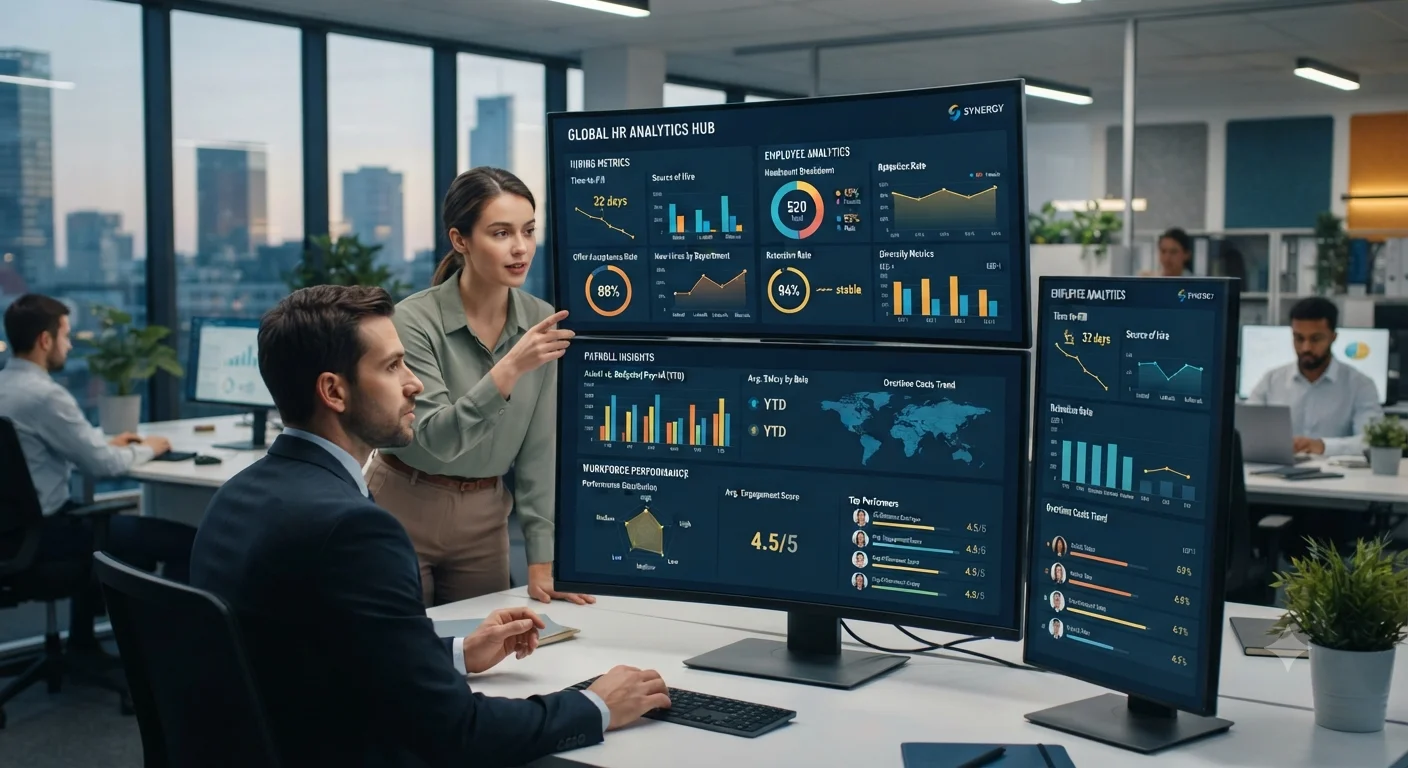
- Intelligent dashboards
- Employee sentiment tracking
- Skills mapping
HR professionals gained faster access to meaningful workforce insights without having to compile reports manually.
Payroll Technology Improvements
Payroll also received significant attention during October 2025.
The latest payroll technology innovations included:
- Automated tax calculations
- Real-time payroll validation
- Fraud detection
- Compliance monitoring
- Global payroll support
Large enterprises especially benefited from automation, which reduced payroll errors and improved compliance across multiple regions.
Better HR Analytics
The demand for HR analytics continues to grow rapidly.
Organizations wanted answers to questions like:
- Why are employees leaving?
- Which teams perform best?
- What skills are missing?
- Which recruitment channels deliver top candidates?
- How can productivity improve?
Advanced analytics platforms used machine learning to uncover patterns that traditional reporting often missed.
Why Are AI Recruiting Tools Becoming Essential?
Companies are hiring in a more competitive labor market than ever before. AI recruiting tools help recruiters move faster without sacrificing candidate quality.
Several factors explain the growing adoption.
Faster Hiring
Traditional recruitment often involved:
- Hundreds of resumes
- Manual screening
- Repetitive interviews
- Administrative work
AI significantly reduced these bottlenecks.
Better Candidate Matching
Instead of relying solely on keywords, modern recruiting technology analyzes:
- Experience
- Skills
- Certifications
- Career progression
- Industry expertise
This produced more accurate candidate recommendations.
Improved Diversity Initiatives
Many vendors introduced responsible AI features designed to reduce unconscious bias.
Although AI isn’t perfect, organizations are increasingly combining technology with human oversight to create fairer hiring processes.
What Workforce Technology Trends Emerged During October 2025?
Beyond AI, organizations embraced broader workforce technology trends that supported hybrid work, digital collaboration, and long-term talent development.
Several themes dominated industry conversations.
Skills-Based Hiring
Employers shifted away from focusing exclusively on university degrees.
Instead, recruiters prioritized:
- Practical experience
- Verified skills
- Certifications
- Project portfolios
- Technical assessments
This trend expanded talent pools while improving hiring quality.
Internal Talent Mobility
Rather than hiring externally for every vacancy, organizations increasingly invest in:
- Skills management software
- Internal job marketplaces
- AI career recommendations
- Employee development programs
Helping existing employees grow became more cost-effective than replacing them.
Digital Workplace Investments
Organizations also upgraded digital workplace infrastructure through:
- Collaboration software
- Workflow automation
- Knowledge management
- Employee productivity software
- Cloud HR solutions
These investments supported hybrid teams while improving operational efficiency.
How Did HR Innovation Continue Beyond Automation?
One of the most exciting developments was that HR innovation moved beyond saving time. Technology started helping HR leaders make smarter strategic decisions that directly impacted business growth.
Instead of simply replacing manual work, intelligent platforms began offering recommendations for workforce planning, employee retention, leadership development, and succession planning.
This shift transformed HR from an administrative function into a strategic business partner.
How Are Enterprise HR Software Platforms Evolving in 2025?
Enterprise HR software is no longer just a system for storing employee records. In October 2025, leading platforms became intelligent business hubs that integrated recruitment, payroll, learning, performance, and workforce planning into a single, seamless ecosystem.
For large organizations managing thousands of employees, having separate tools for every HR function creates data silos and unnecessary complexity. Modern enterprise HR software has solved this challenge by bringing everything together on a single cloud-based platform.
The biggest improvements included:
- AI-assisted workflow automation
- Unified employee records
- Cross-department reporting
- Real-time workforce analytics
- Integrated payroll and benefits
- Advanced security and compliance
- Mobile-first employee experiences
This shift made HR teams more efficient while giving executives better visibility into workforce performance.
Why Are HR SaaS Platforms Becoming the New Industry Standard?
Cloud-based HR SaaS platforms have become the preferred choice because they’re easier to deploy, more scalable, and receive continuous feature updates without expensive infrastructure upgrades.
Unlike traditional on-premise systems, modern HR platforms allow organizations to:
- Scale quickly as teams grow
- Access HR data securely from anywhere
- Integrate with third-party business applications
- Receive automatic software updates
- Lower IT maintenance costs
This flexibility is especially valuable for companies with hybrid or remote workforces.
Key Benefits of Cloud HR Solutions
Organizations adopting cloud HR solutions reported advantages such as:
- Lower operational costs
- Faster implementation
- Better employee self-service
- Improved collaboration
- Enhanced disaster recovery
- Greater data accessibility
As businesses continued their HR digital transformation, cloud adoption accelerated across nearly every industry.
How Is People Analytics Changing HR Decision-Making?
People analytics is helping HR leaders replace assumptions with evidence. Instead of relying on intuition alone, companies are using workforce data to make smarter decisions about hiring, retention, and development.
The rise of people analytics was one of the most significant stories in the latest HR technology news.
Modern analytics platforms can answer critical questions, including:
- Which departments have the highest turnover?
- What factors influence employee engagement?
- Which recruitment sources produce top performers?
- What skills will the organization need next year?
- Which employees are at risk of leaving?
These insights allow HR teams to act proactively rather than reactively.
The Growing Role of Predictive Analytics
Traditional HR reports looked at the past.
Predictive analytics focuses on the future.
AI models now estimate:
- Future hiring needs
- Retention risks
- Workforce costs
- Promotion readiness
- Leadership potential
- Skills shortages
This capability supports long-term workforce planning and better business outcomes.
How Is Employee Experience Technology Improving Workplace Satisfaction?
Employee experience technology has evolved from simple survey tools into intelligent platforms that support every stage of the employee journey—from onboarding to career development.
Organizations realized that happy employees are often more productive, engaged, and loyal.
As a result, investments in employee experience technology increased significantly during October 2025.
AI-Powered Employee Feedback
Rather than waiting for annual surveys, companies now collect feedback continuously through:
- Pulse surveys
- AI chat assistants
- Anonymous suggestion platforms
- Sentiment analysis
- Real-time engagement dashboards
This gives HR teams immediate visibility into workplace morale.

Personalized Learning Experiences
Learning management systems became much smarter.
Instead of assigning the same courses to everyone, AI recommends training based on:
- Job role
- Career goals
- Current skill level
- Performance data
- Industry trends
Employees benefit from learning paths tailored to their professional growth.
What New Talent Acquisition Software Features Emerged?
Talent acquisition software is becoming more intelligent, collaborative, and data-driven. In October 2025, vendors introduced features designed to improve both recruiter efficiency and candidate experience.
Some of the most notable innovations included:
AI Candidate Matching
Advanced matching algorithms now evaluate:
- Technical skills
- Soft skills
- Industry experience
- Career progression
- Cultural alignment
- Certifications
This produces stronger candidate recommendations than simple keyword searches.
Interview Automation
Many recruiting technology platforms have been added:
- Self-scheduling interviews
- AI-generated interview questions
- Interview summaries
- Candidate scorecards
- Automated reminders
These features reduce administrative work while improving consistency.
Talent Intelligence
One of the fastest-growing areas is talent intelligence, where AI analyzes internal and external talent data to identify:
- Future hiring trends
- Skills availability
- Competitive hiring markets
- Internal promotion opportunities
This helps organizations build stronger long-term recruitment strategies.
Why Is HR Digital Transformation Accelerating?
Digital transformation is no longer optional. Businesses that rely on outdated HR processes risk falling behind competitors in productivity, recruitment, and employee satisfaction.
The latest HR industry updates indicate that organizations are investing heavily in digital transformation initiatives.
Key priorities include:
- Automating repetitive tasks
- Centralizing HR data
- Enhancing employee self-service
- Improving decision-making with analytics
- Supporting hybrid work
- Strengthening cybersecurity
These investments help HR teams become strategic partners instead of administrative departments.
Signs Your Organization Needs Digital HR Transformation
Many businesses still rely on manual processes.
Common warning signs include:
- Paper-based onboarding
- Spreadsheet-driven reporting
- Manual payroll calculations
- Disconnected HR systems
- Slow recruitment workflows
- Limited workforce visibility
Modern HR technology addresses these challenges while improving efficiency across the organization.
How Are Remote Workforce Tools Continuing to Evolve?
Although many employees have returned to offices, hybrid and remote work remain permanent for countless organizations. As a result, remote workforce tools continue to evolve rapidly.
Companies invested in technologies that support distributed teams without sacrificing collaboration or productivity.
Popular solutions include:
- Virtual onboarding platforms
- Digital document signing
- Employee communication hubs
- Project management software
- Performance tracking tools
- Workforce scheduling systems
These technologies help maintain a connected workforce regardless of location.
Supporting Employee Productivity
Modern employee productivity software focuses on enabling employees rather than monitoring them.
Key features include:
- Goal tracking
- Time management
- Collaboration tools
- Task automation
- Meeting insights
- Knowledge sharing
Organizations increasingly recognize that trust and flexibility often lead to stronger performance than excessive oversight.
How Is HR Compliance Software Becoming Smarter?
Compliance remains one of the biggest responsibilities for HR teams, and technology is making it much easier to manage changing regulations across multiple regions.
Modern HR compliance software automates many routine tasks, including:
- Policy acknowledgments
- Employment documentation
- Regulatory reporting
- Audit preparation
- Record retention
- Training compliance
AI also helps identify potential compliance risks before they become costly issues.
Global Workforce Challenges
International organizations face additional complexity, such as:
- Different labor laws
- Tax regulations
- Benefits requirements
- Payroll standards
- Data privacy rules
Integrated compliance tools reduce these risks by keeping policies and workflows up to date.
What Are the Biggest HR Technology Trends Heading Into 2026?
The innovations highlighted in the October 2025 HR tech news cycle continue to shape the industry in 2026. AI is becoming more capable, but the focus is shifting toward responsible, transparent, and human-centered implementation.
Here are the trends expected to have the greatest impact:
- Generative AI in HR: AI assistants will draft job descriptions, create onboarding materials, summarize meetings, and answer employee questions.
- Skills-Based Workforce Planning: Organizations will prioritize verified skills over traditional credentials for hiring and promotion.
- Hyper-Personalized Employee Experiences: AI will tailor learning, benefits, and career development to individual needs.
- Advanced People Analytics: Predictive insights will guide hiring, retention, and succession planning.
- Integrated HR Ecosystems: Businesses will favor unified platforms over multiple disconnected tools.
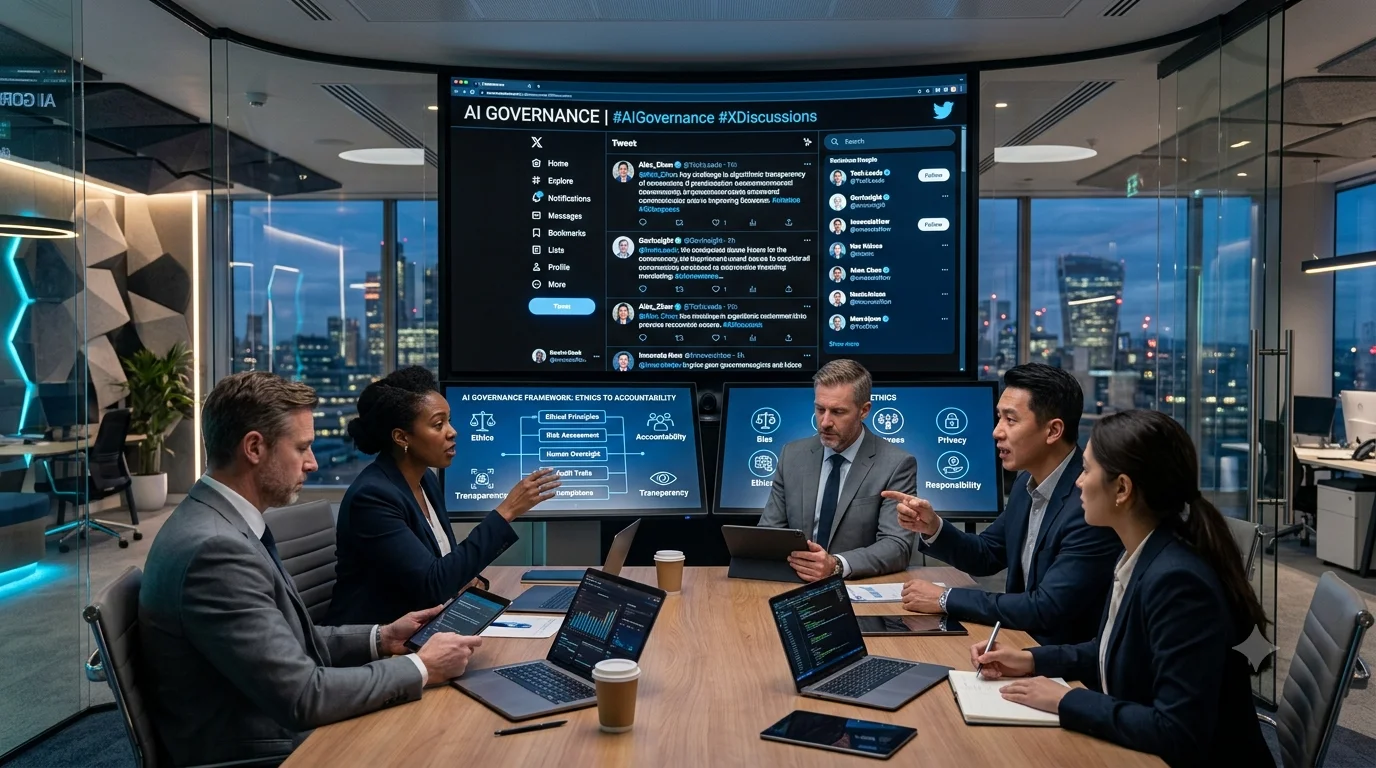
- Responsible AI Governance: Transparency, fairness, and privacy will become key differentiators for HR technology vendors.
- Automation With Human Oversight: AI will handle repetitive tasks, while HR professionals focus on strategy, culture, and employee relationships.
Comparison Table: Leading Types of HR Technology in 2025
| HR Technology Category | Best For | Key Benefits | Ideal Business Size |
|---|---|---|---|
| AI Recruiting Tools | Faster hiring | Resume screening, candidate matching, interview automation | Small to Enterprise |
| HRIS Software | Centralized employee management | Employee records, workflows, and reporting | Medium to Enterprise |
| Payroll Technology | Payroll accuracy | Tax automation, compliance, global payroll | All sizes |
| Learning Management Systems | Employee development | Personalized learning, skills tracking | Medium to Enterprise |
| Performance Management Software | Continuous feedback | Goal setting, reviews, coaching | All sizes |
| Employee Engagement Tools | Workplace satisfaction | Surveys, recognition, sentiment analysis | All sizes |
| Workforce Management Software | Scheduling & operations | Attendance, workforce planning, forecasting | Medium to Enterprise |
| Benefits Administration Software | Employee benefits | Enrollment, compliance, self-service | Medium to Enterprise |
| Talent Management Platforms | Career development | Succession planning, skills management | Enterprise |
| AI-Powered HR Platforms | End-to-end HR transformation | Automation, analytics, intelligent recommendations | Enterprise |
This comparison highlights how organizations are moving toward integrated solutions that combine multiple HR functions into a single intelligent platform, reducing complexity while improving decision-making.
Which HR Tech Companies Are Leading Innovation in 2025?
The biggest names in HR technology continued to invest heavily in artificial intelligence throughout October 2025. At the same time, newer startups introduced specialized AI solutions that challenged traditional HR software providers with faster innovation cycles.
Rather than focusing only on payroll or recruitment, today’s leading vendors are building connected ecosystems that manage the complete employee lifecycle.
Some of the areas seeing the fastest innovation include:
- AI-powered recruiting
- Human capital management (HCM)
- Employee engagement
- Learning management
- Workforce planning
- Payroll automation
- HR analytics
- Talent intelligence
One clear trend in workforce technology is that businesses increasingly prefer platforms that integrate multiple HR functions rather than relying on separate tools.
What Makes AI-Powered HR Platforms Different?
AI-powered HR platforms don’t simply automate repetitive tasks—they learn from workforce data, identify trends, and recommend smarter business decisions.
This represents a major shift from traditional HR software.
Instead of asking HR professionals to search for information manually, intelligent platforms proactively surface insights like:
- Employees at risk of leaving
- High-potential future leaders
- Emerging skills gaps
- Hiring bottlenecks
- Workforce productivity trends
- Training recommendations
These recommendations help HR leaders spend less time collecting data and more time acting on it.
Key Features of Modern AI HR Platforms
Today’s most advanced platforms commonly include:
- AI recruiting assistants
- Resume screening
- Interview scheduling
- Workforce forecasting
- Employee sentiment analysis
- Skills mapping
- Internal mobility recommendations
- Personalized learning paths
- Payroll automation
- Compliance monitoring
As AI continues to mature, these capabilities are becoming standard rather than premium features.
How Is Workforce Planning Becoming More Strategic?
Workforce planning is evolving from annual headcount planning into a continuous, data-driven process supported by artificial intelligence.
Organizations now need to respond quickly to changing business priorities, economic conditions, and labor market shifts.
Modern workforce planning software helps answer important questions such as:
- Which departments will need additional hiring?
- What skills will become critical next year?
- Where are talent shortages likely to occur?
- Which employees are ready for promotion?
- Which positions face the greatest turnover risk?
Having these insights allows businesses to prepare rather than react.
Skills Management Is Becoming a Competitive Advantage
Another major trend from the HR technology trends landscape is the growing importance of skills management software.
Instead of organizing employees solely by job titles, companies increasingly build detailed skills profiles covering:
- Technical expertise
- Leadership abilities
- Certifications
- Languages
- Industry knowledge
- Soft skills
This approach improves internal mobility while reducing unnecessary external hiring.
Why Is Talent Intelligence Receiving So Much Attention?
Talent intelligence combines internal workforce data with external labor market insights to help organizations make smarter hiring decisions.
Recruiters no longer depend only on resumes.
Modern talent intelligence platforms analyze:
- Market salary trends
- Skills availability
- Competitor hiring activity
- Candidate demand
- Geographic talent pools
- Future workforce shortages
These insights support long-term recruitment strategies instead of short-term hiring decisions.
Benefits of Talent Intelligence
Organizations adopting talent intelligence report improvements in:
- Hiring quality
- Recruitment speed
- Diversity initiatives
- Internal mobility
- Workforce planning
- Employee retention
As competition for skilled professionals increases, access to better workforce intelligence becomes a significant advantage.
How Is HR Innovation Improving Employee Retention?
Hiring great employees is only part of the challenge. Keeping them engaged has become equally important, which is why retention technology continues to receive major investment.
Companies increasingly recognize that replacing experienced employees is expensive and disruptive.
Technology now supports retention through:
- Career development planning
- Personalized learning
- Employee recognition
- Continuous feedback
- Wellness initiatives
- AI-driven engagement monitoring
Employee Retention Technology
Modern employee retention technology identifies warning signs before employees resign.

Examples include:
- Declining engagement
- Reduced collaboration
- Missed development opportunities
- Burnout indicators
- Limited career progression
HR teams can then intervene with coaching, mentoring, or development programs before valuable employees leave.
What Challenges Still Exist With AI in HR?
Despite rapid innovation, AI adoption also brings important challenges. Organizations must balance automation with transparency, fairness, and human oversight.
The biggest concerns discussed throughout October 2025 HR news included:
AI Bias
Algorithms can unintentionally reflect biases found in historical hiring data.
Responsible organizations now:
- Audit AI systems regularly
- Review hiring outcomes
- Maintain human decision-making
- Improve data quality
- Monitor fairness metrics
Data Privacy
HR systems store sensitive employee information.
Organizations must ensure:
- Strong cybersecurity
- Secure cloud infrastructure
- Access controls
- Data encryption
- Privacy compliance
Trust remains essential for successful HR digital transformation.
Change Management
Even the best technology fails without employee adoption.
Successful implementations include:
- Staff training
- Clear communication
- Executive support
- Continuous feedback
- Phased rollouts
Technology works best when people understand how it improves their daily work.
How Should Businesses Choose the Right HR Management Software?
Choosing HR software isn’t about selecting the platform with the longest feature list. It’s about finding the solution that fits your organization’s size, goals, and future growth plans.
Before investing, organizations should evaluate several factors.
1. Business Size
Small businesses often benefit from simple, easy-to-use platforms.
Large enterprises usually require:
- Advanced security
- Global payroll
- Workforce analytics
- Compliance management
- Multi-location support
2. Integration Capabilities
The best HR platforms connect easily with:
- Payroll systems
- Accounting software
- Collaboration tools
- CRM platforms
- Learning systems
Strong integrations reduce duplicate work and improve data accuracy.
3. AI Features
Useful AI capabilities include:
- Candidate matching
- Workforce forecasting
- Employee recommendations
- Automated reporting
- Skills analysis
Organizations should prioritize AI features that solve real business challenges rather than simply adding complexity.
4. User Experience
Employees expect HR software to be as easy to use as consumer apps.
Modern platforms should offer:
- Mobile access
- Self-service portals
- Simple navigation
- Fast performance
- Personalized dashboards
A positive user experience encourages adoption across the organization.
What Lessons Can HR Leaders Learn From October 2025?
Perhaps the biggest lesson is that technology alone doesn’t transform HR—people do. The most successful organizations combine intelligent software with thoughtful leadership, strong workplace culture, and continuous employee development.
The companies seeing the best results typically share several characteristics:
- They invest in employee training alongside new technology.
- They use AI to support—not replace—human decision-making.
- They rely on data while still valuing human judgment.
- They continuously measure outcomes and improve processes.
- They focus on long-term workforce development instead of short-term cost savings.
These lessons continue to shape the future of work news as businesses prepare for increasingly digital workplaces.
Expert Outlook: What Should HR Professionals Expect Next?
Looking ahead, HR professionals should expect AI to become even more embedded in everyday workflows, while regulations and ethical standards continue to evolve.
Key developments likely to dominate the next phase of HR innovation news include:
- More conversational AI assistants for employees and managers
- Greater adoption of predictive workforce planning
- Expansion of skills-based hiring models
- Deeper integration between HR and business intelligence systems
- Increased focus on explainable and transparent AI
- Enhanced employee wellness technologies
- Smarter automation for compliance and payroll
- Broader use of talent marketplaces to support internal mobility
For HR teams, staying informed about these changes will be essential for maintaining a competitive workforce and delivering a better employee experience.
What Should Businesses Do After Following the Latest HR Tech News?
Keeping up with HR technology news is valuable, but real results come from taking action. Organizations that successfully adopt modern HR technology focus on solving business problems rather than simply chasing the newest trends.
Whether you’re a startup with ten employees or a global enterprise managing thousands of workers, the right technology strategy can improve hiring, employee satisfaction, and operational efficiency.
Here are some practical steps HR leaders should consider.
1. Audit Your Current HR Technology
Before investing in new software, evaluate your existing systems.
Ask questions like:
- Are employees still completing manual paperwork?
- Does your HR team spend too much time on repetitive administrative tasks?
- Can managers access workforce insights quickly?
- Are payroll and compliance processes automated?
- Is employee data stored in one central location?
Understanding your current gaps makes it easier to prioritize future investments.
2. Build an AI Adoption Roadmap
AI shouldn’t be introduced all at once.
Instead, create a phased implementation plan.
A practical roadmap may look like this:
- Automate repetitive HR tasks.
- Introduce AI-assisted recruiting.
- Improve onboarding workflows.
- Deploy HR analytics dashboards.
- Expand predictive workforce planning.
- Continuously evaluate performance and employee feedback.
A gradual rollout helps employees adapt while minimizing disruption.
3. Invest in Employee Training
Technology delivers the best results when employees understand how to use it.
Provide regular training on:
- New HR software
- AI-powered workflows
- Security best practices
- Digital collaboration
- Data privacy
- Self-service HR tools
Well-trained employees are more confident, productive, and willing to embrace change.

4. Prioritize Data Security
Modern HR platforms manage highly sensitive employee information.
Organizations should implement:
- Multi-factor authentication (MFA)
- Role-based access controls
- End-to-end encryption
- Regular security audits
- Secure cloud backups
- Compliance monitoring
Protecting employee data builds trust and reduces organizational risk.
5. Measure Results Continuously
Digital transformation is an ongoing process—not a one-time project.
Track key performance indicators (KPIs) such as:
- Time-to-hire
- Employee retention
- Cost-per-hire
- Employee engagement
- Training completion rates
- Payroll accuracy
- HR service response time
- Internal promotion rates
Reviewing these metrics regularly helps identify opportunities for continuous improvement.
Key Takeaways From HR Tech News Today, October 2025
If you only remember a few insights from this article, make them these:
- Artificial intelligence became a core component of modern HR operations.
- AI recruiting tools significantly reduced hiring time while improving candidate matching.
- HR analytics and people analytics supported better strategic decision-making.
- Employee experience technology became a major investment priority.
- Payroll automation continued to reduce errors and strengthen compliance.
- Skills-based hiring gained momentum across industries.
- Workforce planning became increasingly predictive through AI.
- Cloud HR platforms replaced many legacy on-premise systems.
- Responsible AI, transparency, and data privacy emerged as essential priorities.
- HR professionals increasingly shifted from administrative work toward strategic business leadership.
These trends continue to shape human resources technology in 2026 and are expected to influence the future of work for years to come.
Frequently Asked Questions (FAQs)
1. What was the biggest HR tech trend in October 2025?
The biggest HR tech trend in October 2025 was the widespread adoption of artificial intelligence across recruitment, onboarding, workforce planning, HR analytics, payroll automation, and employee engagement. Organizations increasingly viewed AI as a strategic business tool rather than an experimental technology.
2. How are AI recruiting tools improving hiring?
Modern AI recruiting tools automate resume screening, rank candidates based on skills and experience, schedule interviews, and assist with candidate communication. This reduces manual work for recruiters, shortens hiring timelines, and improves the overall candidate experience while allowing hiring teams to focus on high-value interactions.
3. Why is HR analytics becoming so important?
HR analytics helps organizations make data-driven decisions about recruitment, retention, workforce planning, employee performance, and engagement. Predictive analytics can identify turnover risks, skills shortages, and future hiring needs, enabling HR leaders to act proactively instead of reacting to problems after they occur.
4. What should businesses look for when choosing HR management software?
When evaluating HR management software, organizations should consider:
- AI-powered automation
- Ease of use
- Cloud accessibility
- Integration with existing business systems
- Payroll capabilities
- Compliance features
- Reporting and analytics
- Scalability for future growth
- Mobile functionality
- Vendor support and security
Selecting software that aligns with business goals is more valuable than choosing the platform with the most features.
5. How is employee experience technology changing workplaces?
Employee experience technology enhances every stage of the employee lifecycle by supporting onboarding, continuous feedback, recognition, personalized learning, career development, wellness initiatives, and engagement tracking. These tools help improve employee satisfaction, retention, and productivity.
6. What role does payroll technology play in digital HR transformation?
Modern payroll technology automates payroll calculations, tax compliance, benefits administration, reporting, and global payroll management. Automation reduces human error, saves time, ensures compliance with evolving regulations, and provides employees with faster access to payroll information through self-service portals.
7. What are the most important HR technology trends for 2026?
Several trends are expected to define HR technology in 2026, including:
- AI-powered HR platforms
- Skills-based hiring
- Predictive workforce planning
- Talent intelligence
- Employee experience personalization
- Advanced people analytics
- HR automation
- Cloud HR solutions
- Responsible AI governance
- Digital workplace innovation
Organizations adopting these technologies thoughtfully will be better positioned to attract, develop, and retain top talent.
8. Is AI replacing HR professionals?
No. AI is transforming the role of HR professionals rather than replacing them. Automation handles repetitive administrative tasks, allowing HR teams to spend more time on strategic initiatives such as leadership development, organizational culture, workforce planning, employee coaching, and business transformation. Human judgment remains essential for ethical decision-making, relationship building, and creating positive workplace experiences.
Final Thoughts
The HR tech news from the October 2025 cycle marked a defining moment in the evolution of human resources technology. Artificial intelligence, automation, and data-driven decision-making moved from emerging concepts to everyday business essentials, fundamentally changing how organizations recruit, manage, develop, and retain talent.
Yet the most successful organizations have learned an important lesson: technology is only as effective as the people and processes behind it. AI can streamline workflows, uncover insights, and improve efficiency, but lasting success still depends on thoughtful leadership, continuous learning, and a people-first culture.
As businesses move through 2026 and beyond, the focus will continue to shift toward responsible AI, personalized employee experiences, integrated HR ecosystems, and predictive workforce strategies. Companies that embrace these innovations while maintaining transparency, fairness, and human oversight will be better equipped to thrive in an increasingly competitive talent landscape.
Whether you’re an HR leader, recruiter, business owner, or technology enthusiast, staying informed about the latest developments in HR technology news, AI in HR, and workforce technology will help you make smarter decisions and prepare for the future of work.
Ready to Stay Ahead?
The HR technology landscape is evolving rapidly. Bookmark this guide, follow trusted industry updates, and regularly evaluate your HR tools to ensure your organization is prepared for the next wave of innovation. Investing in the right technology today can create a more agile, productive, and employee-focused workplace tomorrow.
Brazil Fintech News: Latest Trends, Startups & Market Updates
Techlass: AI Tools, Tech News & Software Reviews (2026 Complete Guide)