What are the Best Tools to remove a battery from a car? Complete DIY Guide (2026)
July 10, 2026
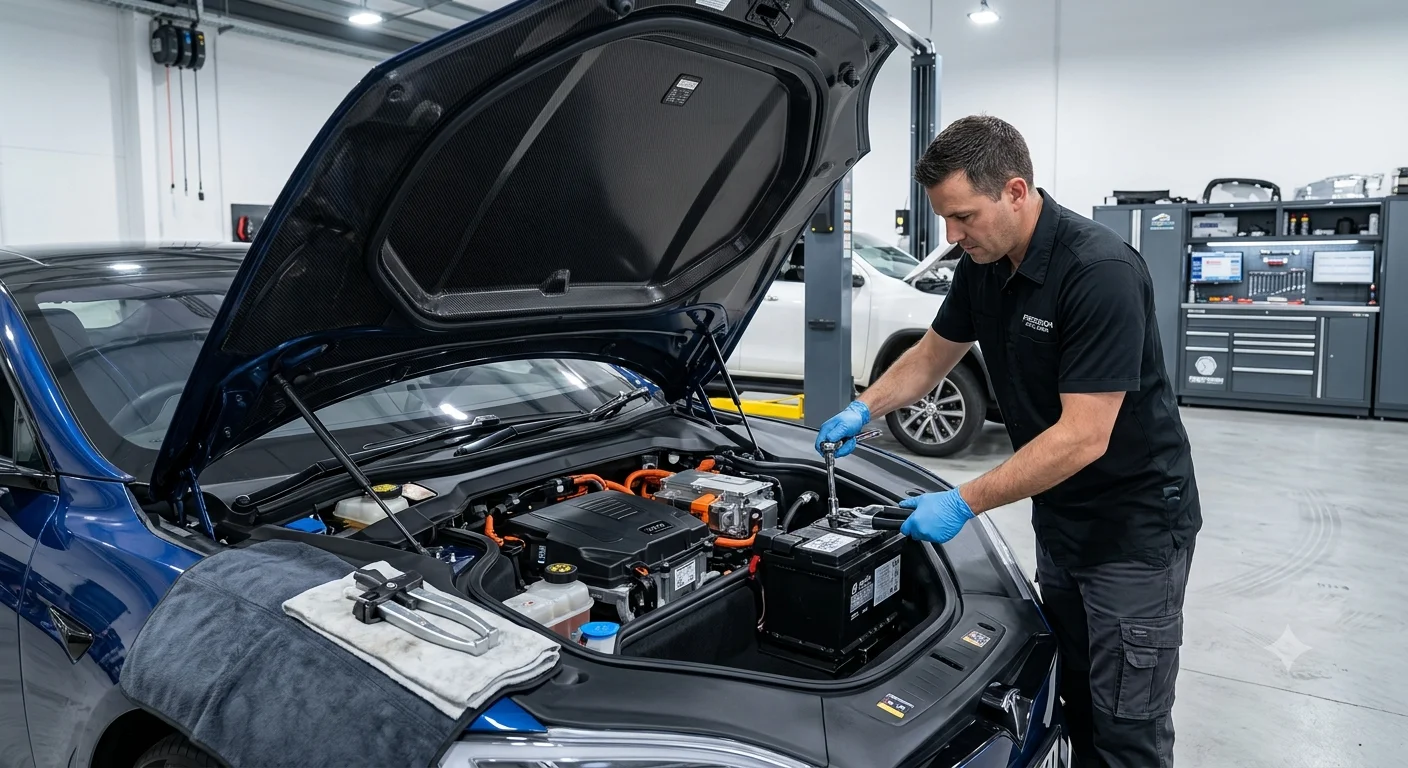
Removing a car battery is one of the easiest DIY maintenance tasks—provided you use the right tools and follow proper safety procedures. Whether you’re replacing an old battery, cleaning corroded terminals, or performing routine maintenance, having the right tools to remove a car battery makes the job faster and safer and helps prevent costly damage to your vehicle’s electrical system.
Unlike many online guides that list a wrench and call it a day, this guide explains exactly which tools you need, why they matter, how to use them correctly, and which ones are worth buying if you plan to maintain your own vehicle.
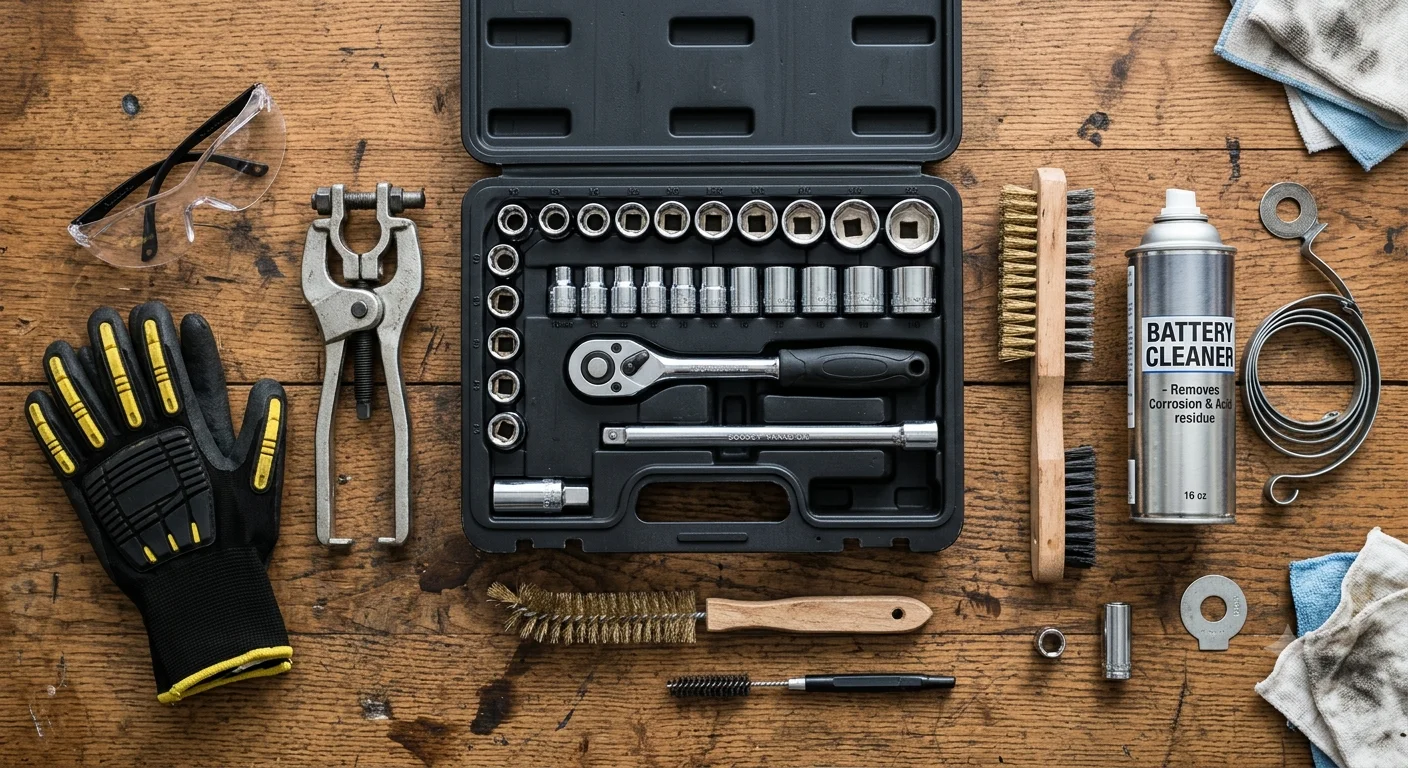
Quick Answer: What Tools Are Needed to Remove a Car Battery?
If you’re wondering what tools are needed to remove a car battery, here’s the short answer.
Tool
Purpose
Recommended?
Socket wrench set
Loosens battery terminals and hold-down bolts
✅ Essential
Ratchet with extension
Reaches recessed battery bolts
✅ Essential
Battery terminal removal tool
Removes stuck cable clamps safely
✅ Recommended
Battery hold-down bolt tool (socket)
Removes battery retaining bracket
✅ Essential
Adjustable wrench
Alternatively, if socket sizes vary
✅ Optional
Battery safety gloves
Protects against acid and corrosion
✅ Essential
Protective eyewear
Shields eyes from battery acid
✅ Essential
Corrosion cleaning brush
Cleans dirty battery terminals
✅ Recommended
Shop towels
Wipes away corrosion and debris
✅ Recommended
Quick Tip: Most vehicles use 10mm battery terminal bolts, but some models require 8mm, 12mm, or 13mm sockets. Always check your owner’s manual before starting.
What Are the Best Tools to Remove Battery From Car
Why Does Using the Right Car Battery Removal Tools Matter?
The right tools make battery removal safer and faster, and help prevent damage to electrical components.
Modern vehicles contain dozens of sensitive electronic systems. Using the wrong wrench or forcing battery terminals off can damage clamps, strip bolts, or even create dangerous sparks.
Using proper automotive battery tools helps you:
Prevent stripped battery terminal bolts
Avoid damaging battery cables
Reduce the chance of accidental short circuits
Remove stubborn terminals safely
Speed up battery replacement
Protect expensive electrical systems
Whether you’re replacing an aging battery or disconnecting it before repairs, investing in the proper equipment pays for itself quickly.
Which Tools Are Essential for Removing a Car Battery?
You don’t need an expensive mechanic’s toolbox, but a few essential tools are non-negotiable.
1. Socket Wrench Set
A quality socket wrench set is the most important tool you’ll use.
Most battery terminals are secured with hex-head bolts that require sockets rather than screwdrivers.
A basic metric socket set should include:
8mm
10mm
12mm
13mm
The 10mm socket is by far the most common.
Why it’s essential
Better grip than adjustable wrenches
Less chance of rounding bolt heads
Faster removal
Easier tightening during installation
2. Ratchet and Extension
Some batteries are buried beneath plastic covers or mounted deep inside the engine bay.
A ratchet and extension allows you to reach bolts without scraping your hands or removing unnecessary components.
Benefits include:
Improved access
Greater leverage
Less effort
Better control
3. Battery Terminal Removal Tool
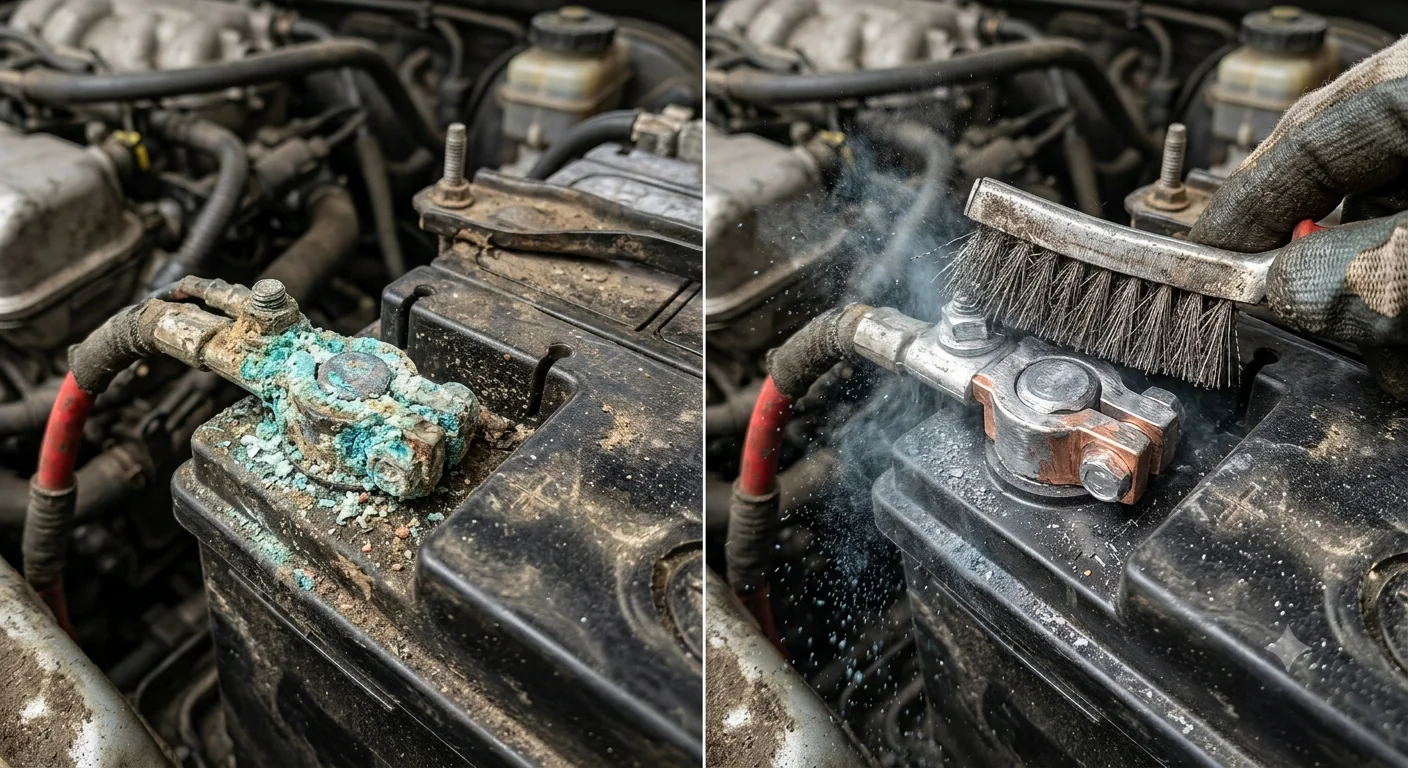
Older vehicles often develop corrosion around battery terminals.
If the cable clamp refuses to budge, never pry it off using a screwdriver.
Instead, use a dedicated battery terminal removal tool (also called a battery terminal puller).
Advantages
Prevents cracked battery terminals
Removes seized clamps evenly
Reduces cable damage
Safer than hammering or twisting
4. Battery Hold-Down Bolt Tool
Many batteries are secured by a battery hold-down clamp located at the base.
Removing this bracket usually requires:
Deep socket
Socket extension
Ratchet
Some manufacturers use unusually long hold-down bolts that are difficult to reach without an extension.
5. Adjustable Wrench
While not always necessary, an adjustable wrench serves as a useful backup.
It’s particularly helpful when:
Socket sizes differ
Working roadside
Borrowing tools
Handling aftermarket battery hardware
6. Battery Safety Gloves
Always wear battery safety gloves before disconnecting a battery.
They protect against:
Acid residue
Corrosion
Sharp battery brackets
Dirty engine components
Rubber-coated mechanic gloves offer excellent grip while maintaining dexterity.
7. Protective Eyewear
Battery acid can cause serious eye injuries.
Even routine battery maintenance may release small particles of corrosion while cleaning the terminals.
Protective glasses are inexpensive and should never be skipped.
8. Corrosion Cleaning Brush
Corroded terminals reduce charging efficiency and can make future battery removal more difficult.
A wire corrosion cleaning brush helps remove:
White corrosion buildup
Green oxidation
Rust around clamps
Dirt deposits
Cleaning the terminals before reinstalling the battery improves electrical contact and extends battery life.
What are the best tools to remove a battery from a car
What is the Best Tool for removing a car battery?
The best overall tool isn’t a single wrench—it’s a combination of quality hand tools designed for battery maintenance.
Here’s how the most common tools compare.
Tool
Best For
Ease of Use
Value
Socket wrench set
Everyday battery removal
⭐⭐⭐⭐⭐
Excellent
Battery terminal puller
Corroded terminals
⭐⭐⭐⭐⭐
Excellent
Adjustable wrench
Emergency use
⭐⭐⭐
Good
Ratchet with extension
Tight engine bays
⭐⭐⭐⭐⭐
Excellent
Complete battery removal kit
Frequent DIY maintenance
⭐⭐⭐⭐⭐
Best Overall
If you regularly perform DIY car maintenance, purchasing a battery removal kit is usually more cost-effective than buying individual tools separately.
How Do You Safely Remove a Car Battery?
Safely removing a battery is less about strength and more about following the correct sequence.
Step 1: Turn Off the Vehicle
Remove the ignition key.
Turn off all electrical accessories.
Allow the engine to cool if it has been running.
Never disconnect a battery while the engine is running.
Step 2: Locate the Battery
Most batteries sit inside the engine compartment.
However, some vehicles place them:
Under the rear seat
Inside the trunk
Beneath a floor panel
Consult your owner’s manual if the battery isn’t immediately visible.
Step 3: Wear Safety Equipment
Before touching the battery:
Put on insulated gloves.
Wear protective eyewear.
Remove metal jewelry such as rings or bracelets.
This simple precaution greatly reduces the risk of accidental short circuits.
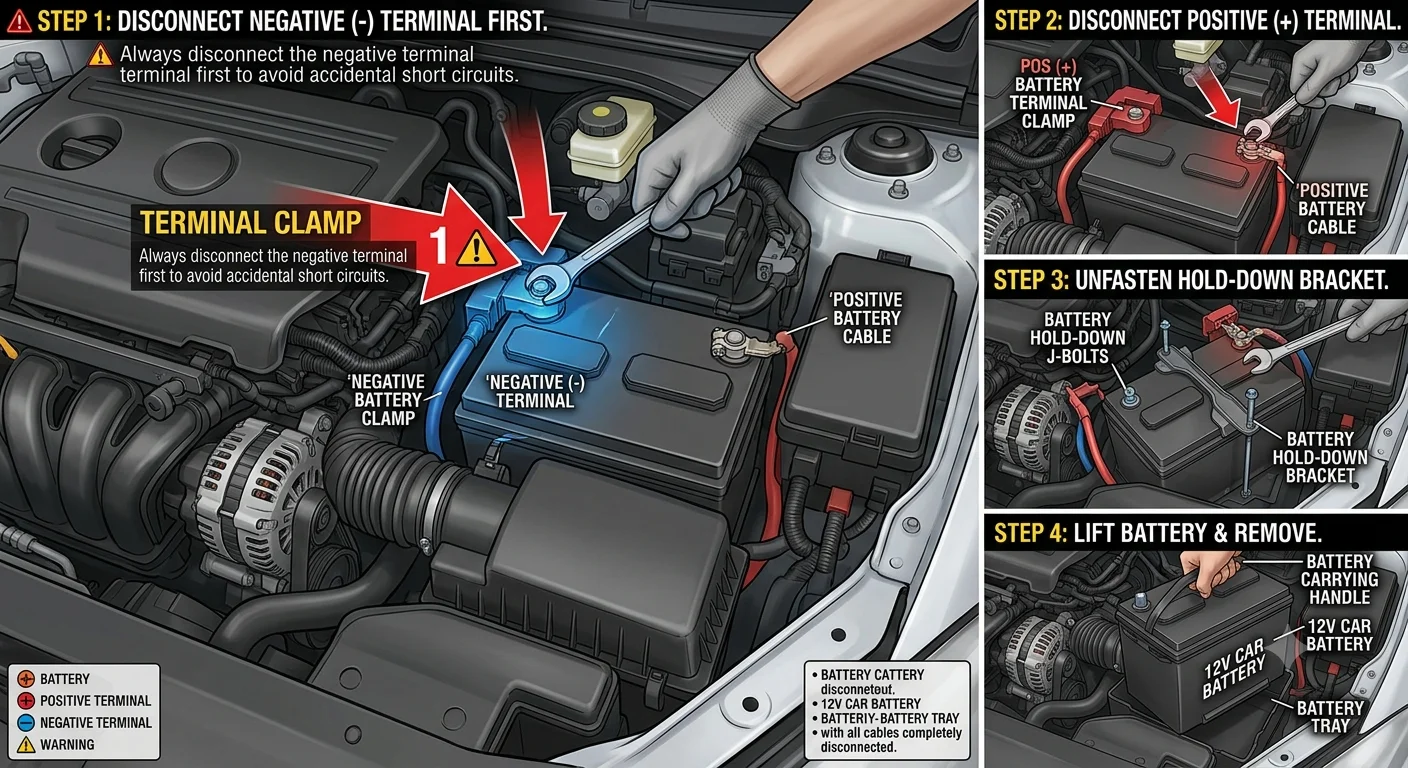
Step 4: Disconnect the Negative Terminal First
Locate the cable marked with a minus (-) symbol.
Using the correct socket or car battery wrench, loosen the clamp and carefully lift it away from the terminal.
Always disconnect the negative terminal first.
This minimizes the chance of creating an electrical short if your tool accidentally touches the vehicle’s metal body.
Step 5: Disconnect the Positive Battery Terminal
Next, remove the positive battery terminal, identified by the plus (+) symbol.
Keep the disconnected cable away from metal components to avoid accidental contact.
What are the best tools to remove a battery from a car
Step 6: Remove the Battery Hold-Down Clamp
Using the appropriate battery hold-down bolt tool, remove the retaining bracket securing the battery in place.
Set the bolts aside in a safe location so they don’t get lost during installation.
Step 7: Lift the Battery Carefully
Car batteries are surprisingly heavy, often weighing between 30 and 50 pounds (14–23 kg).
Lift using both hands while keeping the battery upright to prevent acid leakage.
If the battery has built-in handles, use them for better grip and control.
✔ Expert Tip
Take a quick photo of the battery and cable routing before disconnecting anything. This provides a handy reference when reinstalling the new battery, especially if multiple brackets or cable clips are involved.
⚠ Safety Warning
Never allow a metal wrench to touch both battery terminals simultaneously. Doing so can create a dangerous short circuit, produce sparks, and potentially damage your vehicle’s electrical system or cause personal injury.
What Common Mistakes Should You Avoid When Removing a Car Battery?
Most battery removal problems happen because people rush the job or skip basic safety steps. Avoid these common mistakes to protect yourself and your vehicle.
1. Disconnecting the Positive Terminal First
Always remove the negative terminal before the positive one. Doing it in reverse increases the risk of creating a short circuit if your tool touches the vehicle’s metal body.
2. Using the Wrong Socket Size
A loose-fitting socket can round off battery terminal bolts, making future removal much harder.
3. Pulling on Battery Cables
Never yank battery cables to remove them. Use a battery terminal removal tool or gently twist the clamp until it loosens.
4. Forgetting the Hold-Down Clamp
Many people try lifting the battery before removing the battery hold-down clamp, which can damage the battery tray or mounting hardware.
5. Skipping Terminal Cleaning
Corrosion reduces electrical conductivity and can shorten the life of your new battery. Clean the terminals before reinstalling or replacing the battery.
Pro Tips for Easier DIY Car Battery Removal
If you perform DIY car maintenance, these expert tips can save time and prevent frustration:
Label the positive and negative cables if they aren’t clearly marked.
Apply dielectric grease after cleaning the terminals to help prevent future corrosion.
Keep all bolts and brackets in a small container to avoid losing them.
Inspect battery cables for cracks or fraying while the battery is out.
Check the battery tray for rust, dirt, or moisture before installing a new battery.
Use insulated hand tools whenever possible for added safety.
Did You Know? Extreme heat is one of the leading causes of premature battery failure. Checking your battery twice a year can help prevent unexpected breakdowns.
What Are the Best Tools to Remove Battery From Car
Battery Removal Tool Comparison
Tool
Primary Use
Best For
Essential?
Socket wrench set
Removing terminal and hold-down bolts
Every vehicle
✅ Yes
Ratchet and extension
Reaching deep bolts
Tight engine bays
✅ Yes
Battery terminal puller
Removing seized clamps
Older vehicles
⭐ Recommended
Battery clamp remover
Loosening stubborn cable clamps
Corroded batteries
⭐ Recommended
Corrosion cleaning brush
Cleaning terminals
Battery maintenance
⭐ Recommended
Adjustable wrench
Emergency backup
Occasional use
Optional
Safety gloves
Hand protection
Every DIY job
✅ Yes
Protective eyewear
Eye protection
Every DIY job
✅ Yes
Battery Removal Checklist
Before starting, make sure you have:
✅ Socket ratchet set
✅ Ratchet and extension
✅ Battery terminal removal tool
✅ Battery safety gloves
✅ Protective eyewear
✅ Corrosion cleaning brush
✅ Shop towels
✅ Replacement battery (if needed)
Key Takeaways
The tools to remove the battery from a car include a socket wrench set, a ratchet with an extension, a battery terminal removal tool, a hold-down bolt socket, safety gloves, and protective eyewear.
Disconnect the negative terminal first and reconnect it last during installation.
Clean corrosion before installing the new battery to improve electrical performance.
Never force stuck battery clamps—use the proper battery terminal puller.
Following the correct removal sequence helps protect your vehicle’s electronics and reduces the risk of injury.
Frequently Asked Questions
1. What tools are needed to remove a car battery?
You’ll typically need a socket wrench set, a ratchet with an extension, a battery terminal removal tool, and the correct socket for the battery hold-down clamp. Safety gloves and protective eyewear are also recommended. Some vehicles may require additional tools depending on the battery location and mounting system.
2. What socket size is used for removing car battery terminals?
Most passenger vehicles use a 10mm socket for battery terminal bolts. However, some manufacturers use 8mm, 12mm, or 13mm fasteners. Checking your owner’s manual before starting is the best way to confirm the correct socket size and avoid damaging the hardware.
3. Can I remove a car battery without a battery terminal puller?
Yes, if the battery terminals are clean and not seized, you can often loosen the clamps with a socket wrench and gently twist them off. If corrosion has bonded the clamp to the terminal, a battery terminal puller is the safest option because it prevents damage to the battery posts and cable ends.
4. Why should I disconnect the negative terminal first?
Removing the negative terminal first reduces the risk of accidental short circuits. If your wrench contacts the vehicle’s metal frame while you first loosen the positive terminal, it can complete an electrical circuit and create dangerous sparks. Following the correct sequence improves safety and protects sensitive electronics.
5. How heavy is a typical car battery?
Most standard car batteries weigh between 30 and 50 pounds (14–23 kg), although larger truck and SUV batteries may be heavier. Always lift with both hands, keep the battery upright, and use proper lifting techniques to avoid injury or spilling battery acid.
6. Should I clean the battery terminals before installing a new battery?
Yes. Cleaning corrosion and debris from the battery terminals ensures a solid electrical connection, improves charging performance, and helps extend battery life. A wire brush or dedicated corrosion cleaning brush works well for removing buildup before reconnecting the cables.
7. Can removing the battery reset my car’s electronics?
It can. Disconnecting the battery may reset the clock, radio presets, seat memory, and some engine control module settings. Certain vehicles may also require relearning procedures for idle speed or window functions after reconnecting the battery. Check your owner’s manual for model-specific information.
8. Is a complete battery removal kit worth buying?
If you regularly perform vehicle maintenance, a battery removal kit is a worthwhile investment. These kits typically include a socket set, terminal puller, cleaning brush, gloves, and other essential automotive repair tools, making future battery maintenance quicker, safer, and more convenient.
Conclusion
Removing a car battery doesn’t require professional experience, but it does require the right tools and the correct procedure. A quality socket wrench set, battery terminal, Ratchet, extension, and proper safety gear will handle almost every passenger vehicle on the road.
Whether you’re replacing a worn-out battery, cleaning corroded terminals, or learning basic DIY car maintenance, investing in reliable automotive battery tools makes the job easier and helps prevent unnecessary damage.
By disconnecting the negative terminal first, using the correct socket size, and following the safety tips in this guide, you can confidently remove and reinstall your vehicle’s battery while protecting both yourself and your car.
Hazel Patrica is a Technology Writer and Editor at Emerson FRP Tools. She covers AI tools, software reviews, technology trends, tutorials, and digital innovation. Her goal is to simplify complex technology topics and provide clear, practical information that helps readers make informed decisions in the digital world.
Cookies are small text files that can be used by websites to make a user\'s experience more efficient. The law states that we can store cookies on your device if they are strictly necessary for the operation of this site. For all other types of cookies we need your permission. This site uses different types of cookies. Some cookies are placed by third party services that appear on our pages.
Necessary cookies help make a website usable by enabling basic functions like page navigation and access to secure areas of the website. The website cannot function properly without these cookies.
Marketing cookies are used to track visitors across websites. The intention is to display ads that are relevant and engaging for the individual user and thereby more valuable for publishers and third party advertisers.
Preference cookies enable a website to remember information that changes the way the website behaves or looks, like your preferred language or the region that you are in.